
Danube Bend tour from Budapest

The Danube Bend is one of Hungary's most beautiful and varied regions — three towns with completely different characters follow one another along the river, just an hour or two from Budapest. With an 8-hour private Danube Bend tour, you can explore Szentendre's artists' quarter, Visegrád's medieval castle, and Esztergom's basilica all in a single day — in a comfortable, air-conditioned car, at your own pace, with no public transport and no group schedule.
Szentendre – the artists' town
Recommended time: 1.5–2 hours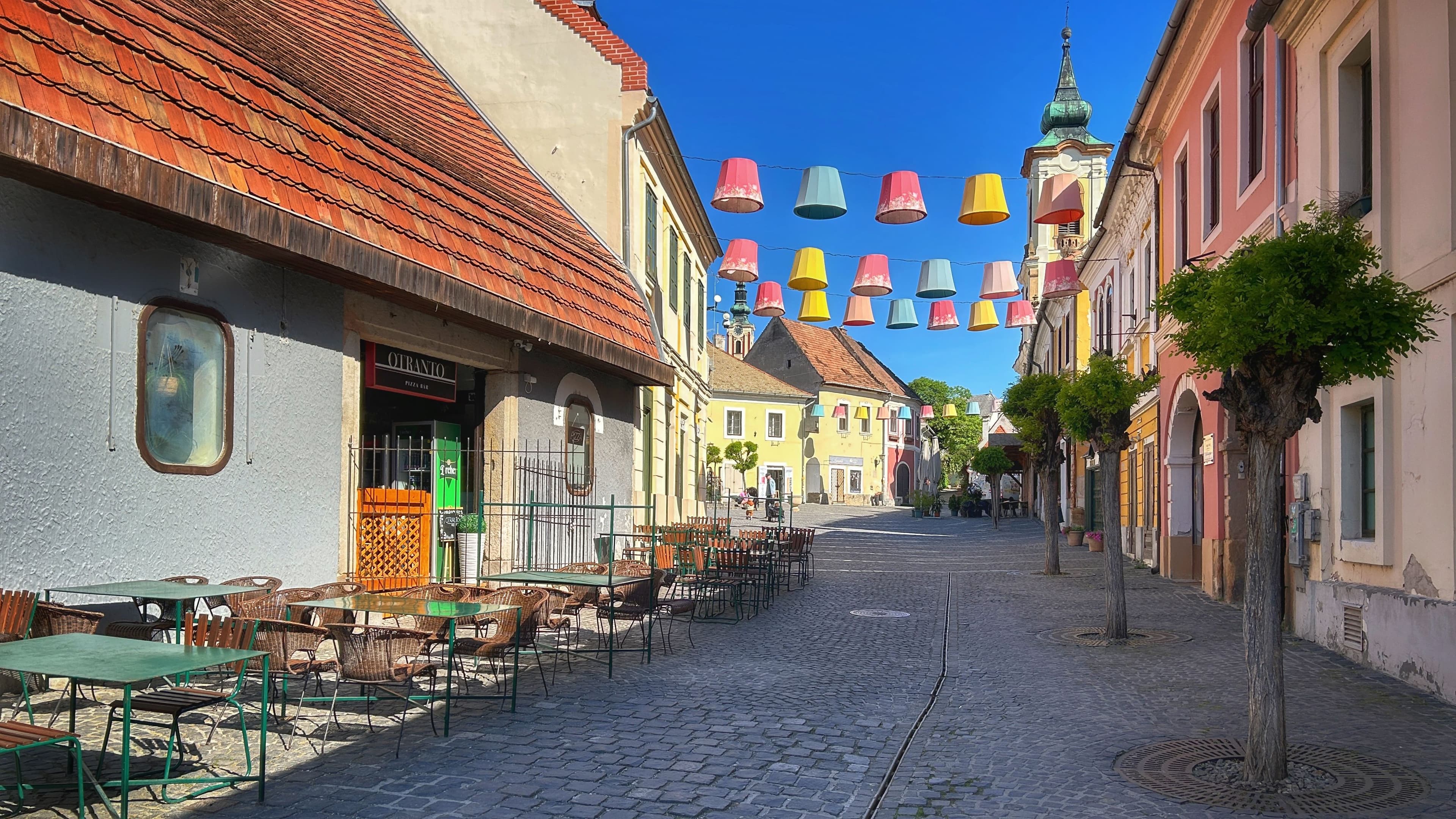
Szentendre is a Mediterranean-style artists' town on the banks of the Danube, just north of Budapest. Its cobblestone streets, colorful Baroque houses, and vibrant creative culture make it one of the most visited towns in Hungary.
Main sights:
- Main Square – the heart of the town, surrounded by pastel-colored Baroque buildings and small cafés. The square dates back to the 18th century, when Szentendre became a major Serbian cultural and commercial center. A large cross in the middle commemorates the plague survivors of 1763.
- Serbian Orthodox Church (Belgrade Cathedral) – built in 1771, one of the most important Orthodox churches in Hungary. Its richly decorated iconostasis and interior frescoes reflect the influence of Balkan religious art.
- Blagovestenska Church – another iconic Orthodox church, built between 1752–1754, featuring beautifully carved wooden iconostasis panels and richly colored interior artwork.
- Marzipan Museum – a fun and unusual attraction where everything is made of marzipan, including models of buildings, Hungarian historical figures, and famous movie characters. Perfect for families.
- Danube Promenade (Dunakorzó) – a peaceful walkway along the river, offering excellent views of the Danube and small boats passing by — a perfect place to relax before continuing north toward Visegrád.
Visegrád – the medieval royal seat
Recommended time: 1.5–2 hours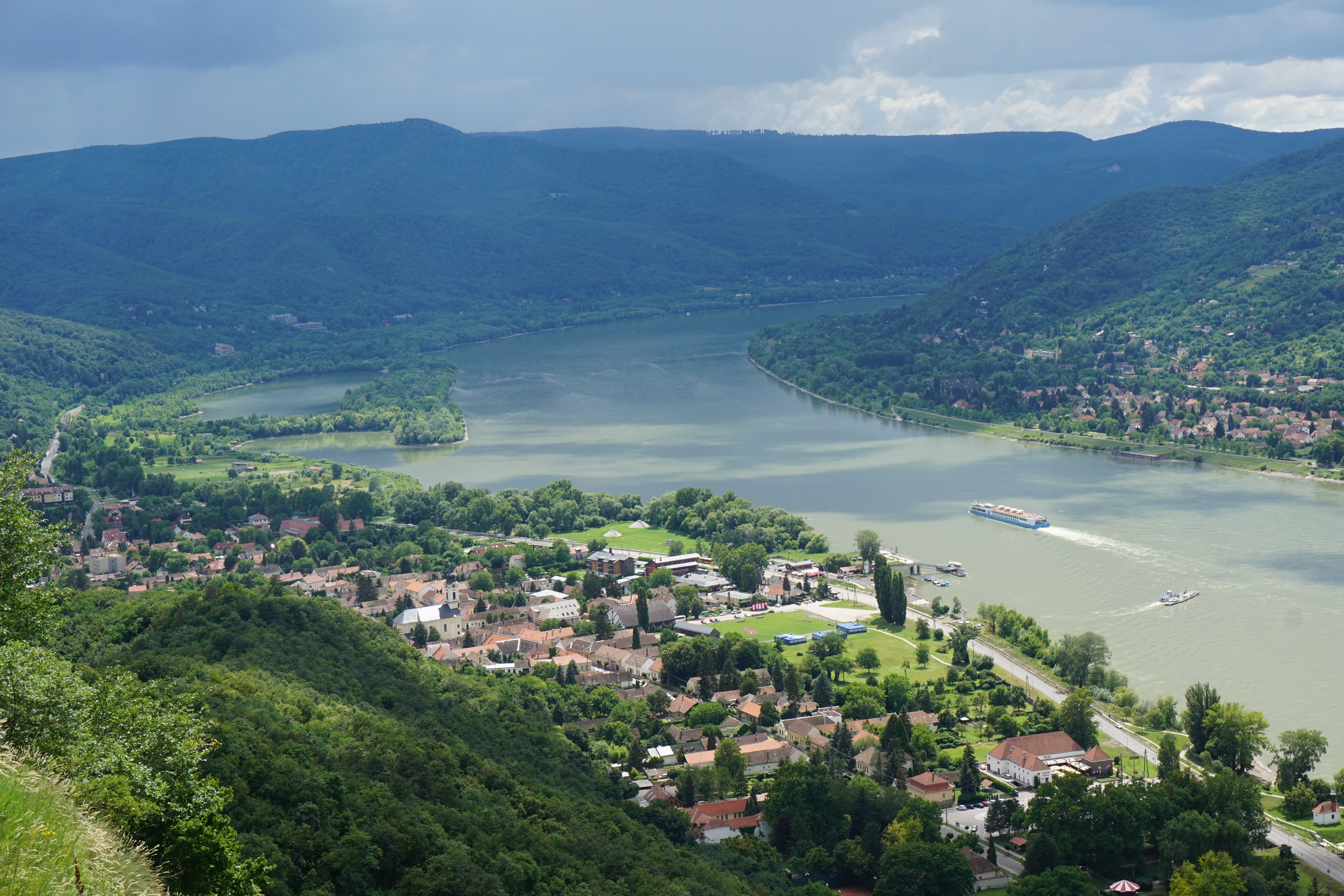
Visegrád is one of the most historically significant locations in Hungary — once a royal seat, a strategic fortress, and the site of major diplomatic events.
Main sights:
- Visegrád Citadel (Fellegvár) – built in the 13th century after the Mongol invasion, the Citadel served as a royal residence and defensive fortress. Perched on top of a steep hill, it offers spectacular views of the Danube Bend, considered one of the best panoramas in Hungary. Inside, visitors can explore medieval exhibits, reconstructed royal rooms, and weaponry displays.
- Solomon Tower – a massive Romanesque stone tower built in the 13th century. Despite its name, it has no connection to King Solomon — the name was given much later. The tower served as a defensive structure, a prison, and an important military lookout point.
- Renaissance Royal Palace – once the luxurious residence of King Matthias Corvinus in the 15th century, it was one of Europe's most elegant Renaissance palaces, known for its elaborate gardens, fountains, and Italian-inspired architecture. A partially reconstructed section displays original tiles, mosaics, and royal décor.
- Panoramic Viewpoints – the hills around Visegrád offer several excellent photo spots, ideal for capturing the river's dramatic curves and forested hills.
Esztergom – the birthplace of the Hungarian state
Recommended time: 2 hours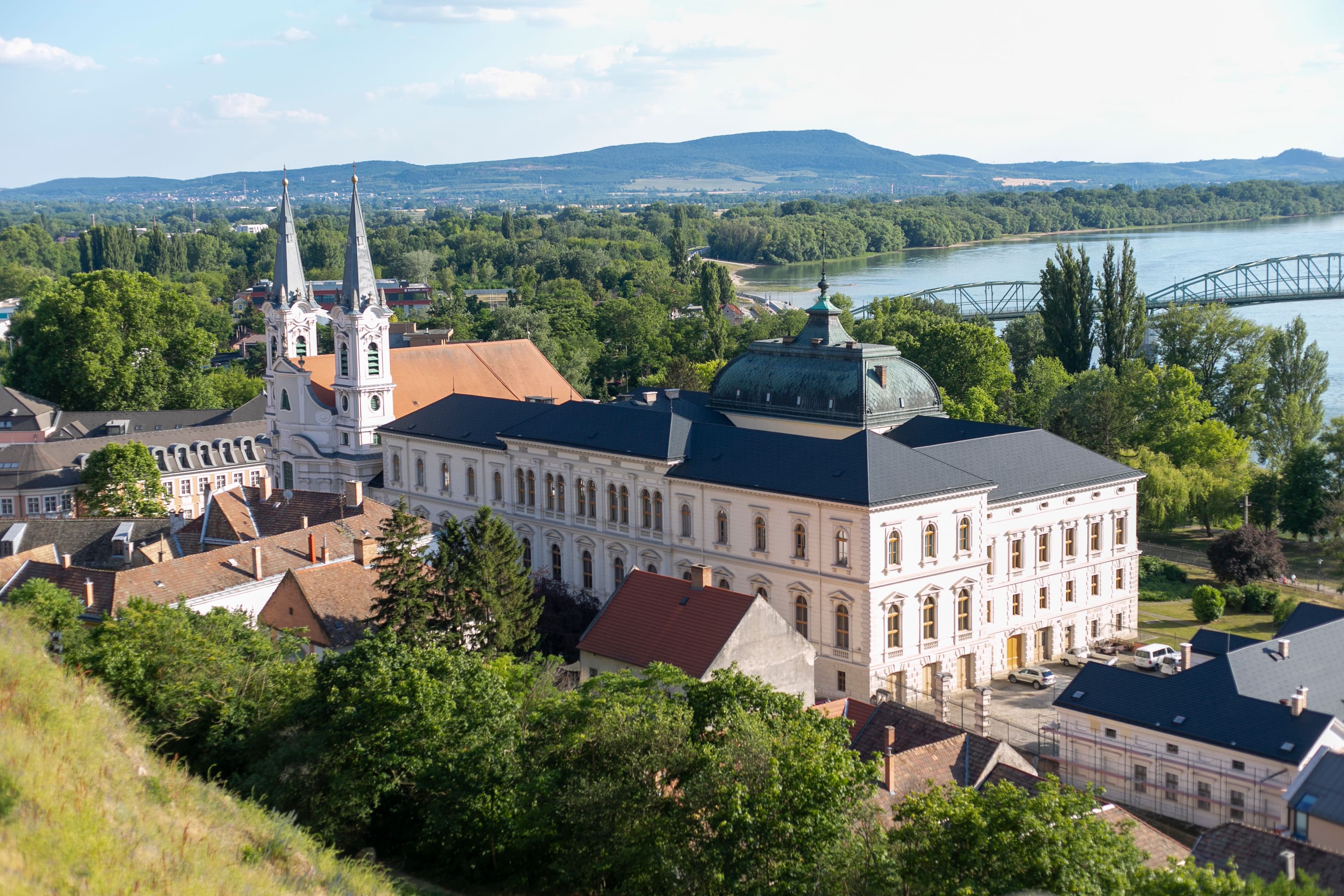
Esztergom is the birthplace of the Hungarian state and the spiritual center of Hungary. It served as the first capital of the kingdom and remains the seat of the Catholic Church today.
Main sights:
- Esztergom Basilica (St. Adalbert Cathedral) – the largest church in Hungary and one of the biggest basilicas in Central Europe. Built between 1822–1869, it stands on Castle Hill overlooking the Danube. Inside you'll find Europe's largest altar painting on a single canvas, along with a treasury full of gold, jewels, and medieval religious artifacts.
- Basilica Treasury – a museum holding one of Europe's richest ecclesiastical collections, including medieval crowns, jeweled chalices, ancient manuscripts, and clothing worn by Hungarian archbishops.
- Royal Palace Ruins – located behind the Basilica, the remains of the original 10th-century royal residence of King Saint Stephen and the early Árpád dynasty. Archaeological excavations have revealed royal chambers, frescoes, and mosaic floors.
- Maria Valeria Bridge – connecting Esztergom with Štúrovo in Slovakia, offering excellent photo opportunities of the Basilica from across the river.
- Danube Riverbank – a peaceful promenade, perfect for an afternoon walk and riverside photography.
Return to Budapest
The route from Esztergom back to Budapest follows the Danube through scenic landscapes, forests, and small riverside villages. The drive typically takes around 60–75 minutes.
Total tour duration: approximately 8 hours
Perfect for: families, couples, photography enthusiasts, cultural travelers